Fall special 15% off smart upgrades

Claim my 15% off

AquaLit

Pool Care & Automation

Pool Automation
The pillar guide

Pool Automation

What can genuinely be automated on a residential pool, what still needs a person, and how to upgrade without getting locked into the wrong equipment ecosystem.

Short answer

Pool automation is equipment and controls that perform pool tasks without you doing them by hand. Most existing residential pools can be partially or extensively automated without rebuilding the pool. Common retrofit upgrades include smart inverter pumps, robotic cleaners, salt systems or automated chemical dosing, heating and cooling, lighting, valve actuators and a central controller.

What automation does not do is remove the need for water testing, equipment inspection or professional judgement. It removes the repetitive work — running the pump intelligently, cleaning on a schedule, holding a temperature, dosing between visits — so the remaining work is smaller and better informed.

Definitions that matter

Smart equipment vs central automation

This distinction decides how much you should spend and in what order. Plenty of pools are better served by two pieces of smart equipment than by a full control system.

Smart Equipment

Individual equipment that performs its own function intelligently — an inverter pump holding a configured flow, a heat pump holding a temperature, a robot running its own schedule.

  • Inverter pumps with configurable target flow
  • Heat and heat/chill pumps
  • Robotic cleaners on a schedule
  • Salt systems and intelligent lighting
  • Equipment monitoring

Centralized Automation

A central controller coordinating several systems together so pool and spa modes, valves, heating, lighting and water features respond as one, rather than as separate devices.

  • Pump, heater and chiller coordination
  • Automated valves and pool/spa modes
  • Lighting zones and water features
  • Sanitizer and chemistry integration
  • One primary app interface

Human Oversight

Automation reduces intervention. It does not eliminate responsible pool care. Configuration, verification, repairs and judgement stay with people — with your service history visible to you.

  • Professional configuration and commissioning
  • Equipment inspection and diagnostics
  • Water verification and chemical replenishment
  • Repairs and physical cleaning where needed
  • Customer portal: worklogs, readings, history
Automation categories

What can actually be automated

Each of these is its own decision with its own payback. You do not have to do them all, and you should not do them all at once.

Service 01

Pool Care & Maintenance

Scheduled service, water chemistry, cleaning and equipment inspection — with a worklog you can actually read after every visit.

Explore Pool Care & Maintenance
Service 02

Pool Repairs

Pumps, heaters, filters, salt systems, valves, leaks and controllers. We diagnose the cause before quoting the fix.

Explore Pool Repairs
Service 03

Renovations & Remodeling

Surface, tile, coping, lighting and equipment-pad rebuilds — pools brought back to better than they started.

Explore Renovations & Remodeling
Service 04

Smart Circulation

An inverter pump that adjusts itself to hold the flow your pool actually needs — not one fixed speed you guessed at.

Explore Smart Circulation
Service 05

Automated Water Care

Sensors and dosing equipment that handle more of the routine sanitizer and pH work between service visits.

Explore Automated Water Care
Service 06

Smart Climate

Heat when a Texas cold front lands, cool when August overheats the water. Set a temperature, not an equipment schedule.

Explore Smart Climate
Service 07

Automated Cleaning

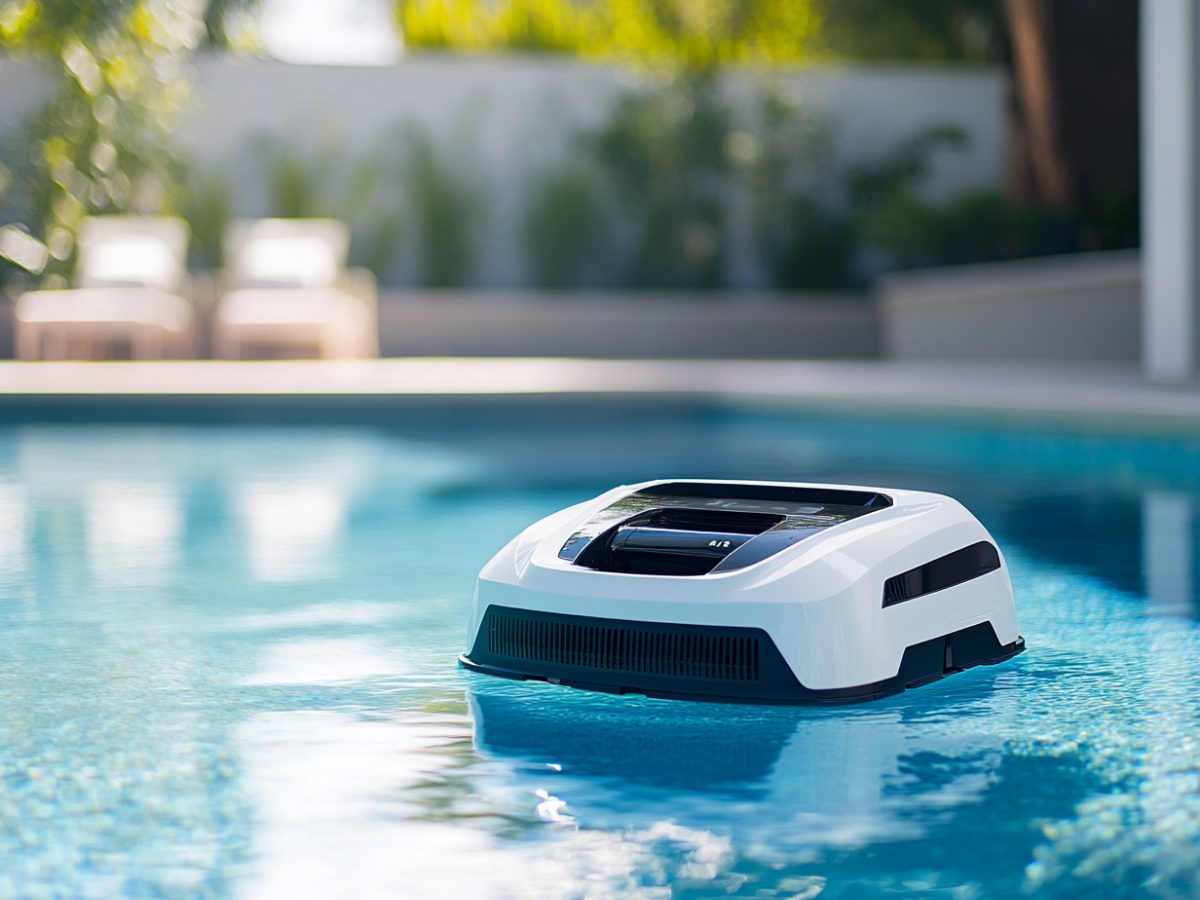
A scheduled robotic cleaner takes the most repetitive job off the list — floors, walls and waterline depending on model.

Explore Automated Cleaning
Service 08

Smart Pool Lighting

Colour, scenes and schedules you control from your phone — including specialty lighting work on existing fixtures.

Explore Smart Pool Lighting
Service 09

Smart Backyard

Valves, spa mode, waterfalls, bubblers and deck jets responding to one button instead of a trip to the equipment pad.

Explore Smart Backyard
Service 10

Central Automation

One brain for the pool. Poolside Tech Attendant, Pentair IntelliCenter or Jandy AquaLink — chosen around your equipment.

Explore Central Automation
Service 11

Saltwater Conversion

A salt cell that generates chlorine so you stop handling tablets. We will also tell you when salt is not the better call.

Explore Saltwater Conversion
Before you buy anything

One question that prevents an expensive mistake

Before installing any major piece of pool equipment, we ask one thing:

Do you ultimately want all of your pool equipment controlled through one central automation system?

The answer changes what we recommend today. If a central controller is in your future, the pump, heater, salt system and valves we install now should be ones that controller can talk to. If it is not in your future, you can buy purely on merit and skip the compatibility premium.

Getting this backwards is the single most common way homeowners end up replacing equipment twice. We automate your pool, not your equipment brand — so we would rather ask the awkward question early than sell you into an architecture that fights you in three years.

What "standard installation" means

Our package pricing assumes normal conditions at the equipment pad. These are quoted separately when they come up:

  • Major replumbing or deteriorated plumbing
  • Valve replacement or new valve actuators
  • Electrical-panel modification or long wiring runs
  • Integration into an existing automation system
  • Equipment-pad reconstruction

You will see any of these before work starts, not on the invoice afterwards.

Add-on categories

The smaller pieces that round out a system

These rarely justify a package of their own, but they matter — and they are usually cheapest to add while something bigger is already open.

Smart water level and autofill

Automated level monitoring and refill reduces hose-dragging and protects the pump from running low on water. It also makes a real leak visible instead of hiding it. More on water-level management.

Valve automation

Motorized actuators turn valves you currently rotate by hand into valves the controller positions — the foundation for pool/spa switching, spillovers, solar loops, water features and alternate returns.

Smart lighting

Lighting can be standalone smart equipment, timed, app-controlled, centrally integrated or built into scenes. It is also where specialty work pays off. More on pool lighting.

Pool covers

Where the cover supports it, opening and closing can be brought into a central system alongside everything else. A cover is also the single most effective way to hold heat overnight and cut evaporation, which quietly improves every other number on the pad.

Swim jets and counter-current systems

More recreational than maintenance automation, but entirely compatible with the smart-backyard story — a swim jet is another circuit a controller can put into a scene.

Where to start

Typical upgrade order

Most homeowners get the best result by sequencing upgrades rather than doing everything at once.

StepUpgradeWhy hereTypical candidate
01Smart circulationRuns every day, affects energy use and every other system's performanceAny pool with a single-speed or aging pump
02Automated cleaningRemoves the largest repetitive labour item immediatelyOwners tired of vacuuming; service customers wanting cleaner water between visits
03Automated water careReduces manual chemical handling; choose salt or dosing on meritPools with high chlorine demand or owners travelling often
04Smart climateExtends the usable season at both ends in TexasPools that are cold in spring and too warm in August
05Lighting & water featuresLifestyle layer — the part guests noticeBackyards used for entertaining
06Central automationTies the above into one interface and one set of scenesPool + spa, multiple valves, mixed-brand equipment

This is a typical order, not a rule. A pool with a failing heater and a perfectly good pump should start at step 04.

Fit check

Who pool automation suits — and who it does not

Automation is usually worth it if

  • You use the pool regularly and want it ready without planning ahead
  • You are running an old single-speed pump
  • You travel and want remote visibility and control
  • You are already paying for service and want better results between visits
  • You have a pool and spa with valves you currently turn by hand
  • You are replacing equipment anyway and want to do it once

Hold off if

  • Your only objective is the lowest possible lifetime cost
  • The pool has structural or plumbing problems that should be fixed first
  • You are selling the house within a year
  • Your current equipment is new and already meets your needs
  • You want a system that removes all human involvement — that product does not exist
Common questions

Pool automation FAQ

Yes. Most existing residential pools can be partially or extensively automated without rebuilding the pool. Retrofit upgrades that are commonly practical include an inverter pump, a robotic cleaner, a salt system or automated chemical dosing, a heat or heat/chill pump, LED lighting, valve actuators and a central controller.

What varies is the equipment pad. Plumbing condition, available electrical capacity and the physical space around the pad determine how much work an upgrade takes.

It depends on which categories you automate. Our featured entry point is the Moov AI 2.0 HP inverter pump installed under standard installation conditions. A robotic cleaner or lighting upgrade sits in its own range. A full central automation build with valves, chemistry and climate is custom quoted after we see the pad.

We do not publish a single all-in price for total automation because the honest number depends on your equipment, your plumbing and how many systems you want tied together.

No. Automation reduces intervention; it does not eliminate responsible pool care. Filters still need cleaning, baskets still fill, sensors need calibration and verification, salt cells scale and eventually need replacement, and water chemistry still needs professional eyes on it.

What automation genuinely changes is how much of the routine work happens without you, and how quickly problems get noticed.

Not necessarily. Plenty of pools are well served by two or three pieces of smart equipment each doing its own job. A central controller earns its cost when you have a pool and spa, several automated valves, a heater or chiller, water features, multiple lighting zones and mixed-brand equipment — anywhere coordination between systems is the actual problem.

It often can, primarily through circulation. An inverter pump running at the flow your pool actually needs generally consumes far less than an older single-speed pump running at full output on a timer.

We will not quote you a guaranteed savings percentage unless it is tied to a documented manufacturer claim. Your actual result depends on your pool's hydraulics, your run times and your electricity rate.

No, and we would not suggest it. Automation makes professional service more effective: the robot cleans between visits, the pump operates intelligently all week, chemistry automation responds between visits and equipment alerts catch issues sooner. Your technician spends their visit on maintenance and judgement instead of repetitive labour.

AquaLit's recommendation

Start with circulation unless something else on the pad is broken. It runs every day, it dominates the pool's electricity use, and every other system performs better behind correct, consistent flow.

Then add categories in the order the pool actually annoys you — not in the order a brochure lists them. And decide the control architecture before replacing major equipment, even if the controller itself is years away.

  • Circulation first for most pools
  • Architecture decided before equipment, to avoid buying twice
  • One category at a time, in your order of annoyance
  • Keep a verification relationship — sensors and filters still need people

Let's talk about your pool

Call or text for a free pool assessment. We look at the pool, the equipment already on your pad and how you actually use the backyard — then tell you what is worth doing and what is not.

Free pool assessment

Tell us what you have and how you use the pool. We'll walk the equipment pad, ask what you ultimately want controlled, and give you an honest recommendation — including the upgrades we'd skip.

832-299-5570 (call or text) info@aqualitpools.com
Weston Lakes, TX — serving greater Houston
Mon–Fri 8am–6pm · Sat 8am–2pm

No obligation. We'll confirm a visit window by phone or text — usually within one business day.