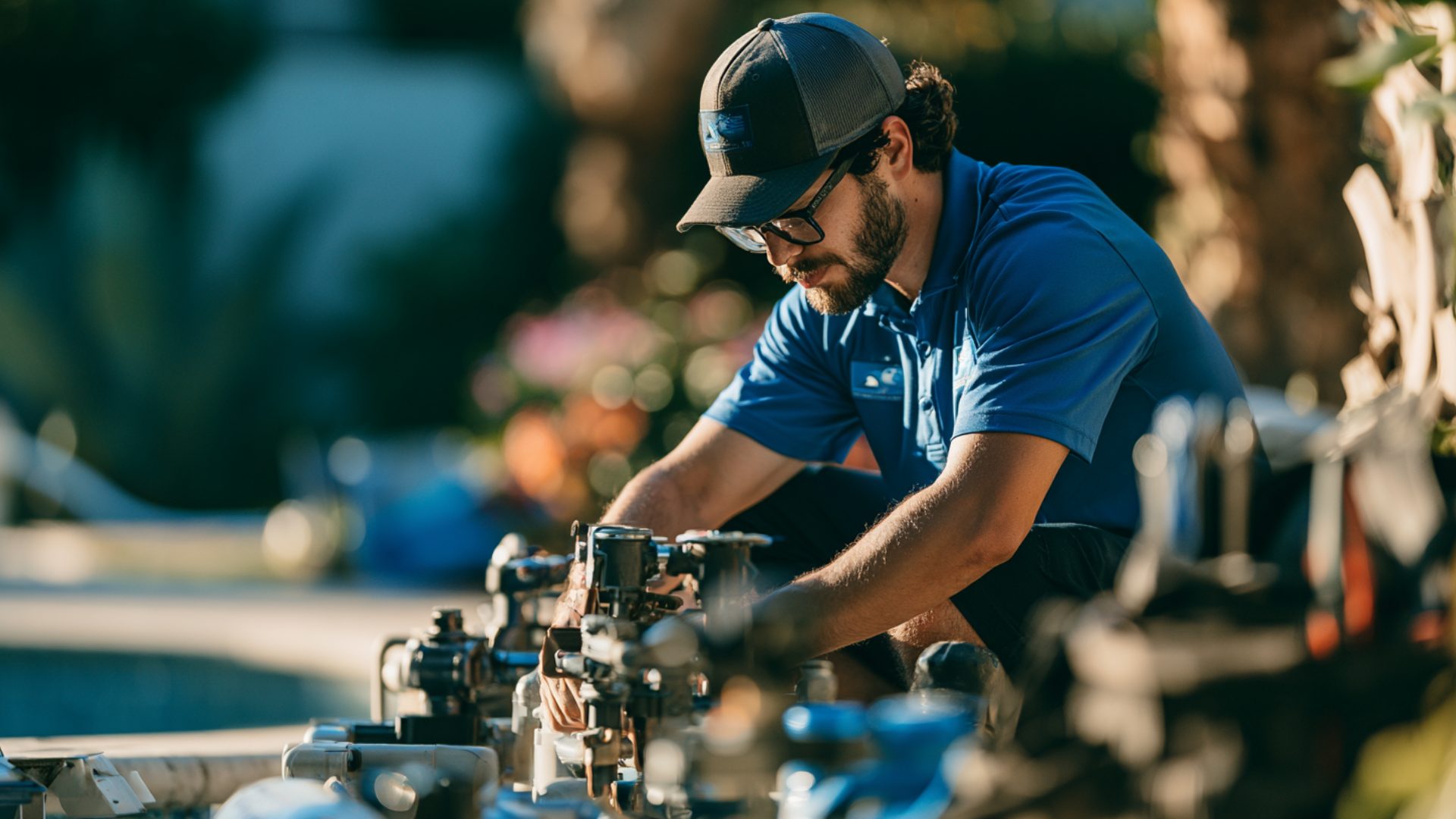
Diagnosis first. A pump drawing air, a heater short-cycling or a salt system reading zero each have half a dozen possible causes, and most of them are cheaper than the part a symptom-based quote replaces. We find the cause, show you what we found, and quote the actual fix.
We work on equipment we did not install, including automation systems that were never properly commissioned — a large share of what we repair is configuration, not hardware.
The pad
Pumps, heaters, filters and salt
The four workhorses, and the four most common failures. Single-speed pumps get an honest conversation: past a certain repair cost you are better off in an inverter pump that pays its difference back in power.
Pump and motor diagnostics, seals, bearings and impellers
Heater and heat pump troubleshooting
Filter service, media replacement and pressure faults
Salt cell cleaning, testing and replacement
Between the pad and the pool
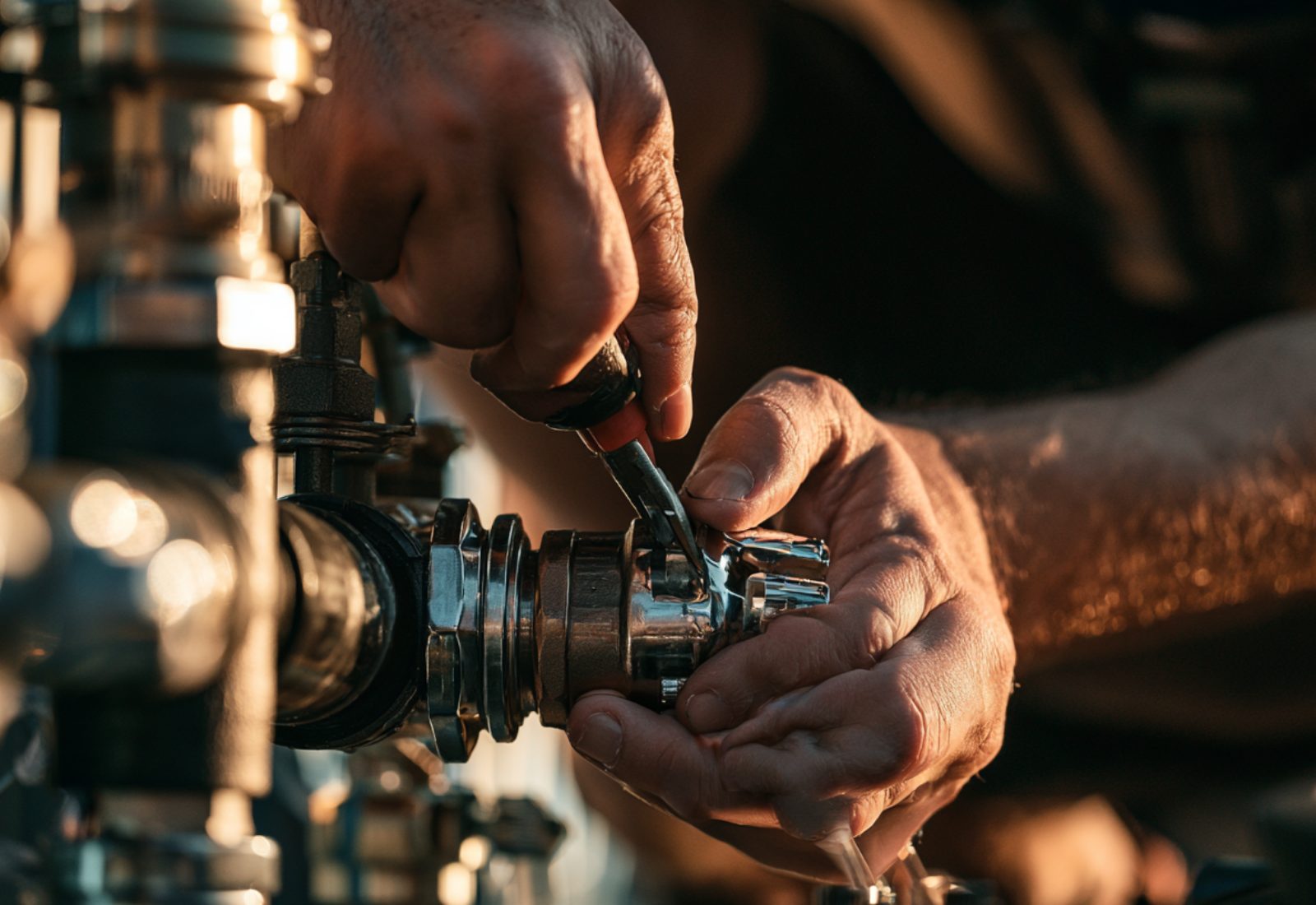
Valves, plumbing and leaks
Air on the suction side, water where it should not be, actuators that stopped turning. The plumbing is where symptoms hide furthest from their causes.
Valve and actuator repair and replacement
Suction and return line faults
Leak isolation and repair
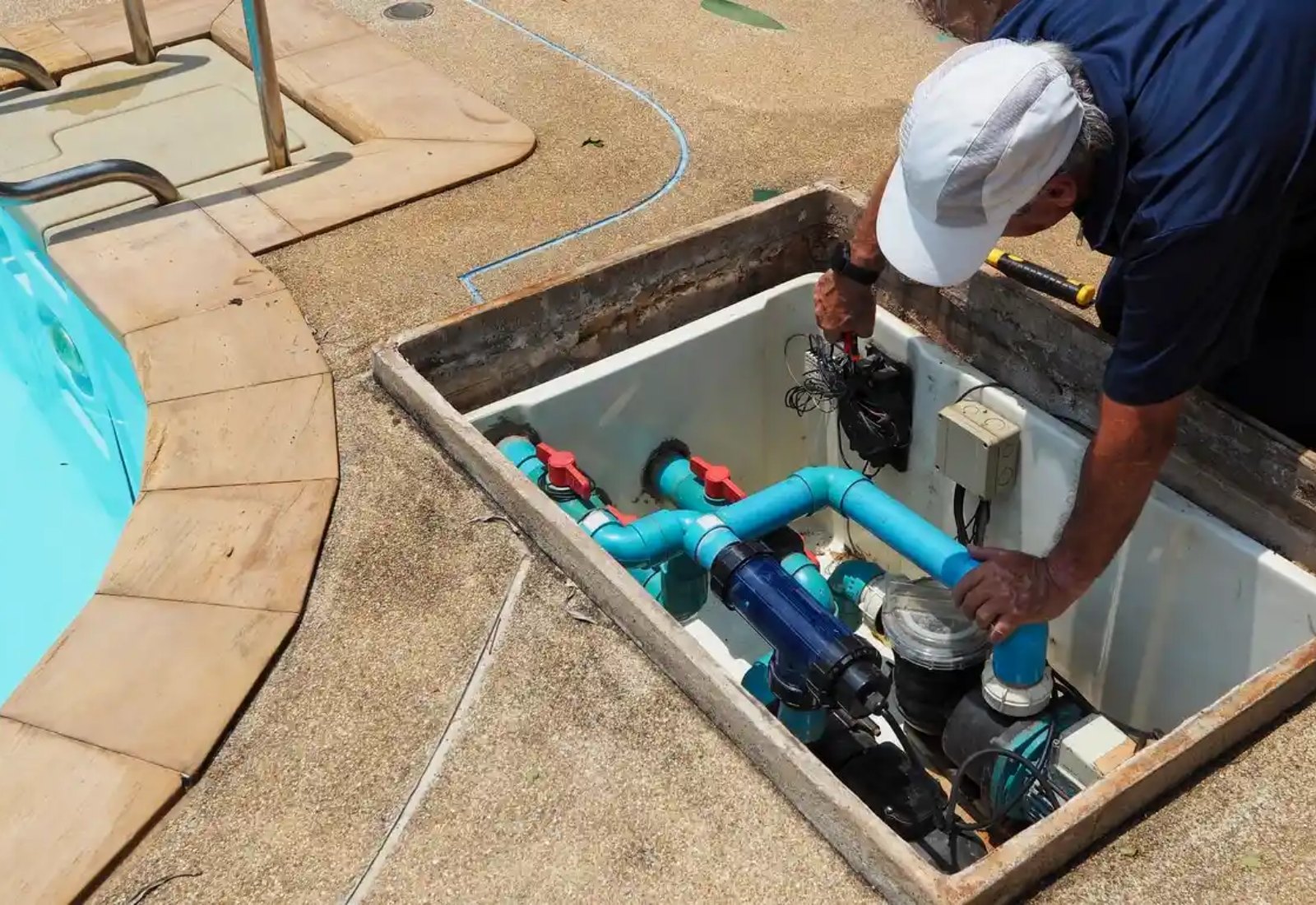
Equipment-pad replumbing where the layout is the problem
The brains
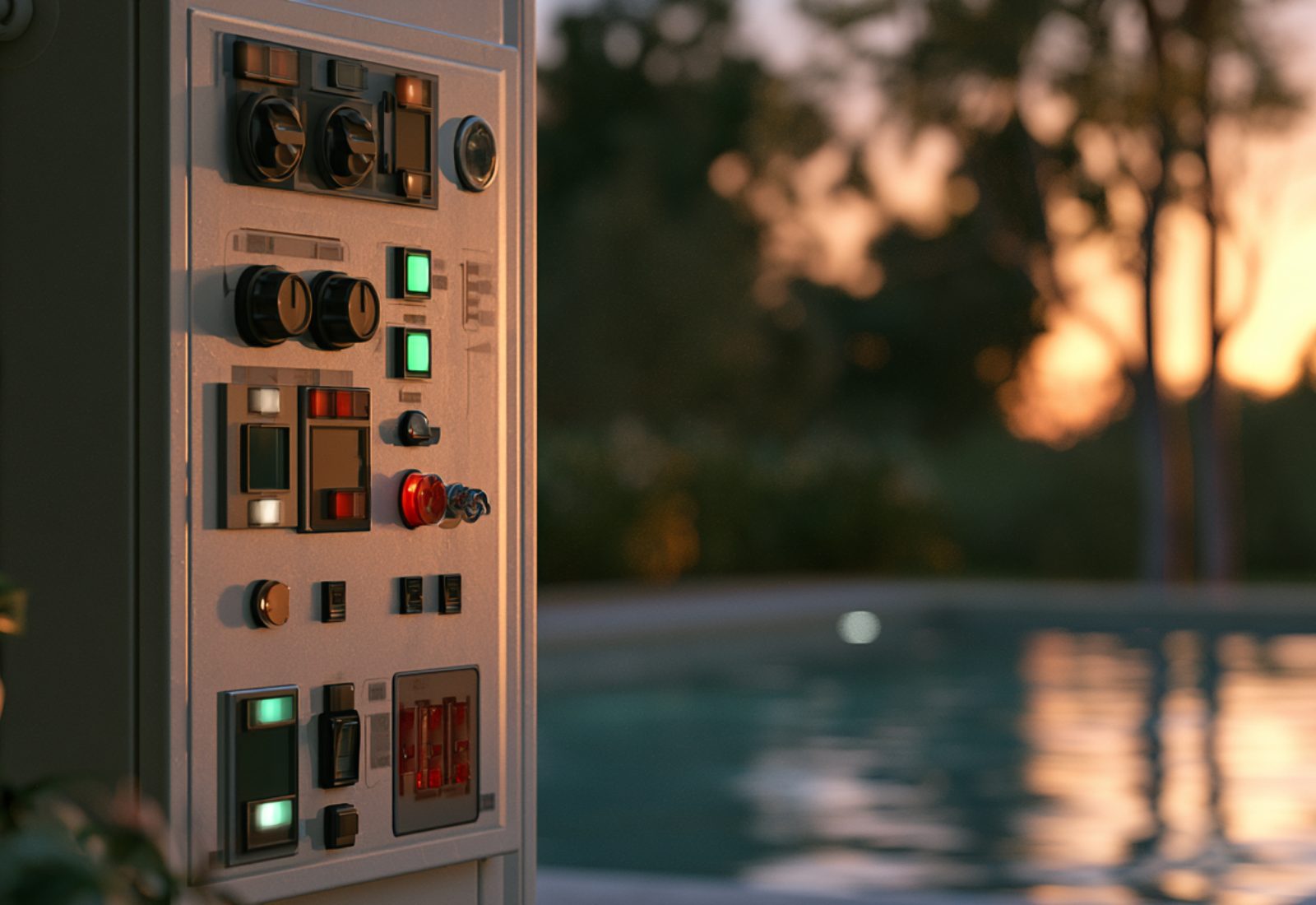
Controllers, lighting and automation
Automation that stopped listening, lights that stopped answering, schedules that quietly stopped running. We repair and recommission Pentair, Jandy and mixed-brand systems.
The equipment is otherwise sound and parts are obtainable
The fault is a seal, bearing, sensor or board rather than the whole unit
The unit is well matched to the pool and you are happy with it
You are not planning an automation change that would strand it
Replace when
Repair cost approaches a meaningful share of a new unit
The equipment is undersized or oversized for the pool
Parts are obsolete or lead times are unworkable
It cannot join the control architecture you are heading toward
It is a single-speed pump and you are paying to run it every day
Questions
Pool repair FAQ
A diagnostic visit is priced as a visit, and we tell you that price before we book it — no number is published here because pretending one figure fits every pad is how repair quotes go wrong. What we will not do is quote a repair sight unseen or replace parts until the symptom stops.
Any of those can be either. A loud pump might be a bearing, cavitation from a suction leak, or debris; losing prime is usually air getting in somewhere cheap to fix; a tripping breaker ranges from a capacitor to a failing motor. This is exactly why we diagnose first — two of those three common causes cost far less than a new pump.
Yes, and it is a large share of our repair work. Many 'failed' automation systems are miscommissioned rather than broken: wrong schedules, unpaired sensors, valves plumbed opposite to their labels. We sort out Pentair, Jandy, Poolside Tech and mixed-brand pads.
Tell us what the pool is doing when you call or text — a pad that is dead entirely, or a leak actively losing water, gets moved ahead of a light that will not change colour. We serve the Weston Lakes, Fulshear, Richmond and Katy corridor daily and schedule the rest of greater Houston in runs.
AquaLit's recommendation
If you are within a couple of years of wanting automation or a renovation, say so before we repair anything. It changes which replacement equipment makes sense today and prevents you buying twice.
Fix the cause, not the symptom
Replace single-speed pumps rather than repairing them
Photograph and log every repair in the portal
Plan the control architecture before major equipment purchases
Call or text for a free pool assessment. We look at the pool, the equipment already on your pad and how you actually use the backyard — then tell you what is worth doing and what is not.
Tell us what you have and how you use the pool. We'll walk the equipment pad, ask what you ultimately want controlled, and give you an honest recommendation — including the upgrades we'd skip.