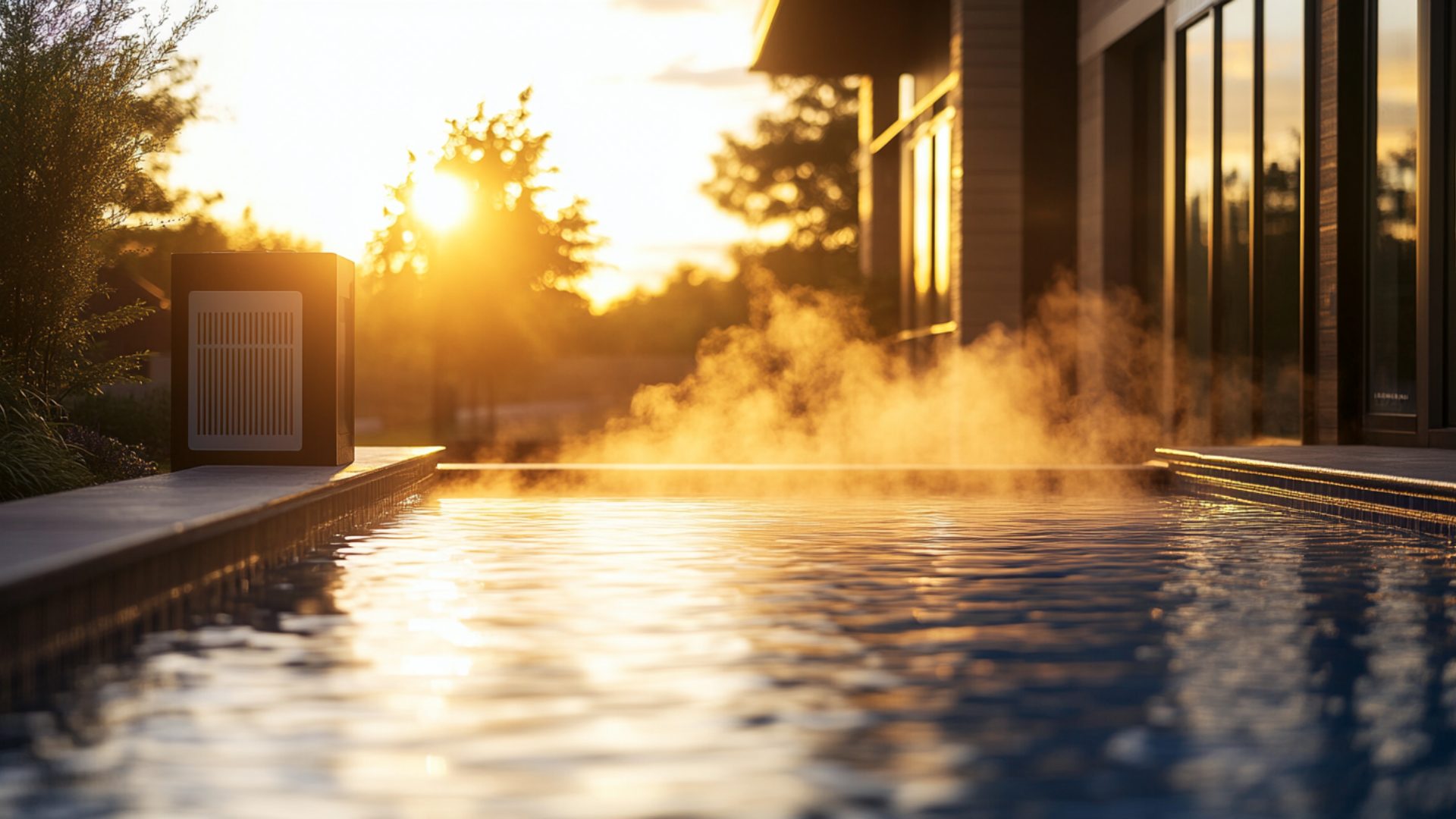
Yes, you can cool a swimming pool in Texas. A heat/chill pump moves heat in either direction, so the same unit that extends your season in March and November can pull heat out of the water in August. In the Houston area this matters more than heating does — high-end pools with dark interiors and full sun regularly reach temperatures nobody finds refreshing.
Paired with automation, you stop thinking about equipment and start thinking about outcomes: set the pool to 82° for tonight and let the system work out the run time.
The Houston problem
When the pool is too warm to be refreshing
A pool sitting in the high 80s or low 90s stops cooling anyone down. It also drives chlorine demand up and makes algae easier to grow, so the water gets harder to manage at the same time it gets less pleasant to swim in.
Heat/chill pumps that reject heat rather than add it
Overnight cooling cycles when ambient temperature drops
Automated temperature targets rather than manual switching
Particularly relevant for dark-interior and full-sun pools
Both ends of the season
Heat when a cold front lands
Texas shoulder seasons are genuinely usable if the water is not the limiting factor. An inverter heat pump holds a temperature efficiently, and we can integrate an existing gas heater where rapid heat-up matters more than efficiency.
Inverter heat pumps for efficient temperature holding
Existing gas heater integration where it makes sense
Temperature sensors and controller integration
Remote pre-heating before you plan to use the pool
Gas heats faster; heat pumps hold temperature more efficiently. Which one suits you depends on whether you swim spontaneously or on a schedule.
Comparison
Gas heater vs heat pump vs heat/chill
Gas heater
Inverter heat pump
Heat/chill pump
Heats quickly
Yes — fastest
Slower, steady
Slower, steady
Efficient to hold temperature
No
Yes
Yes
Can cool the pool
No
No
Yes
Best for
Spontaneous or occasional use
Regular use, season extension
Texas pools that overheat in summer
Ambient dependence
Low
Drops in cold weather
Drops in cold weather
Automation friendly
Via relay or protocol
Often protocol-integrated
Often protocol-integrated
Questions
Heating & cooling FAQ
Yes. A heat/chill pump removes heat from the water and rejects it to the air, the same way an air conditioner cools a house. Cooling capacity is best overnight when ambient air is cooler, which is why automation matters — the system can run when conditions favour it rather than when you happen to think about it.
Long hours of intense sun, warm overnight lows that never let the water shed heat, and often a dark interior finish that absorbs more energy. Shallow tanning ledges and water features that aerate warm water make it more noticeable.
Comfort is personal, but most people stop finding a pool refreshing somewhere in the mid to high 80s, and many Houston pools exceed that for weeks at a time. Higher temperatures also increase chlorine demand and favour algae growth.
With a connected heater or a central controller, yes. This is one of the most-used automation features in practice — deciding at lunchtime that the pool should be ready by evening.
It depends on the target temperature, the temperature difference you are asking for, pool size, whether you use a cover, and the equipment type. We can estimate for your specific pool during an assessment, but we will not publish a single number that pretends every pool is the same.
Fit check
Heat, chill, or both?
Climate control is worth it if
Your pool sits unusably warm through July and August
You want a usable season in March and November, not just June to September
The pool has a dark interior finish or full afternoon sun
There is a spa you want ready on demand
You want to set a temperature rather than manage equipment
Skip it for now if
You only swim in high summer and the temperature suits you
There is no electrical capacity at the pad and adding it is the real cost
A failing pump or plumbing should take the budget first
You expect it to work like a house thermostat — pool volumes move slowly
AquaLit's recommendation
In the Houston area we recommend cooling capability before heating capability. More local pool days are lost to water being too warm than to it being too cold, and a heat/chill pump covers both directions anyway.
If you swim spontaneously and want the spa hot in twenty minutes, gas is still the honest answer for that job. If you want a temperature held efficiently across a season, an inverter heat pump is the better machine. Many good setups keep both.
Heat/chill pump for Texas — cooling is the local problem
Gas for rapid heat-up, especially spas
Integrate with a controller so temperature is a setting, not a chore
Size it to your pool volume, not to a brochure figure
Let's talk about your pool
Call or text for a free pool assessment. We look at the pool, the equipment already on your pad and how you actually use the backyard — then tell you what is worth doing and what is not.
Tell us what you have and how you use the pool. We'll walk the equipment pad, ask what you ultimately want controlled, and give you an honest recommendation — including the upgrades we'd skip.