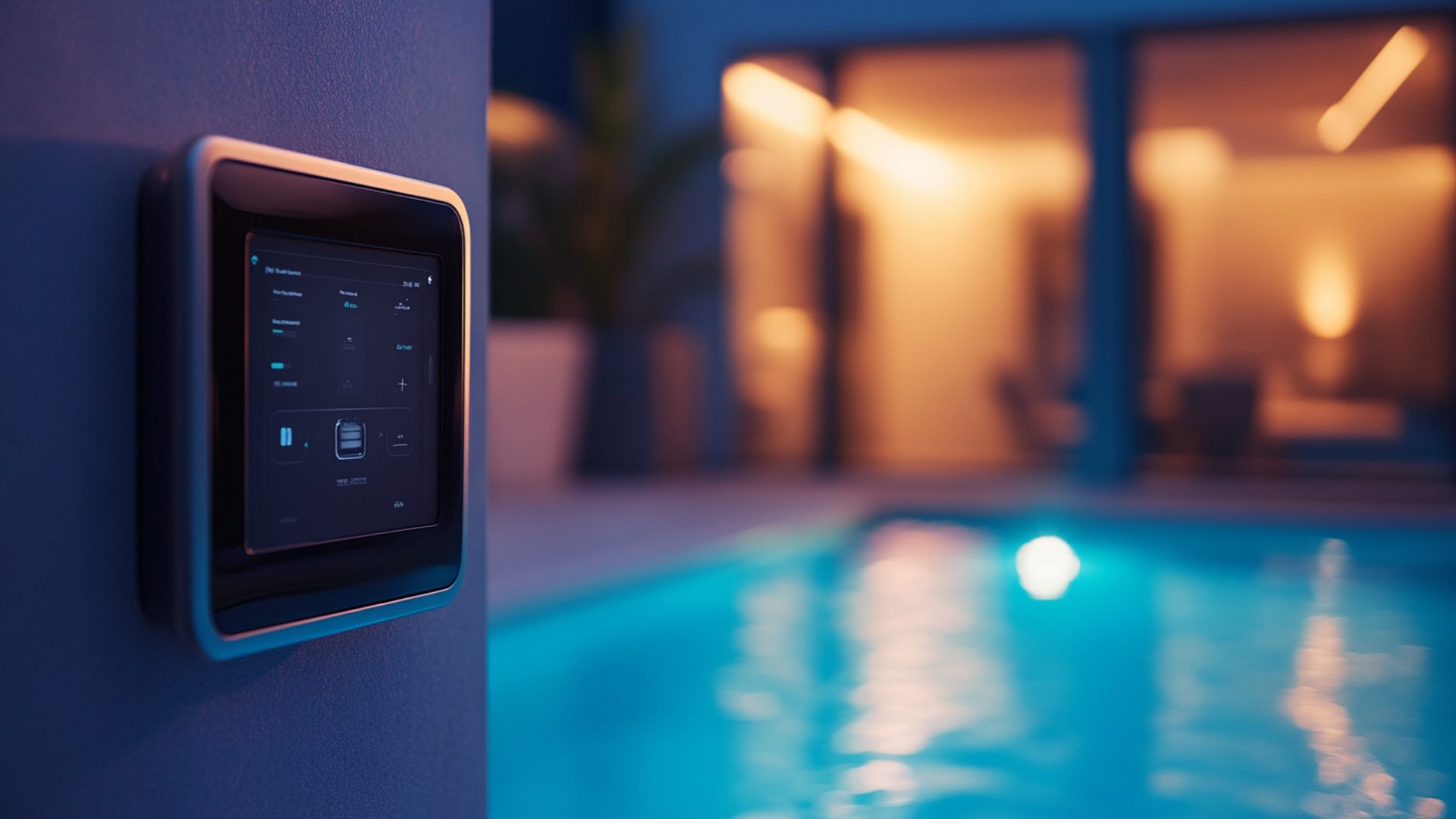
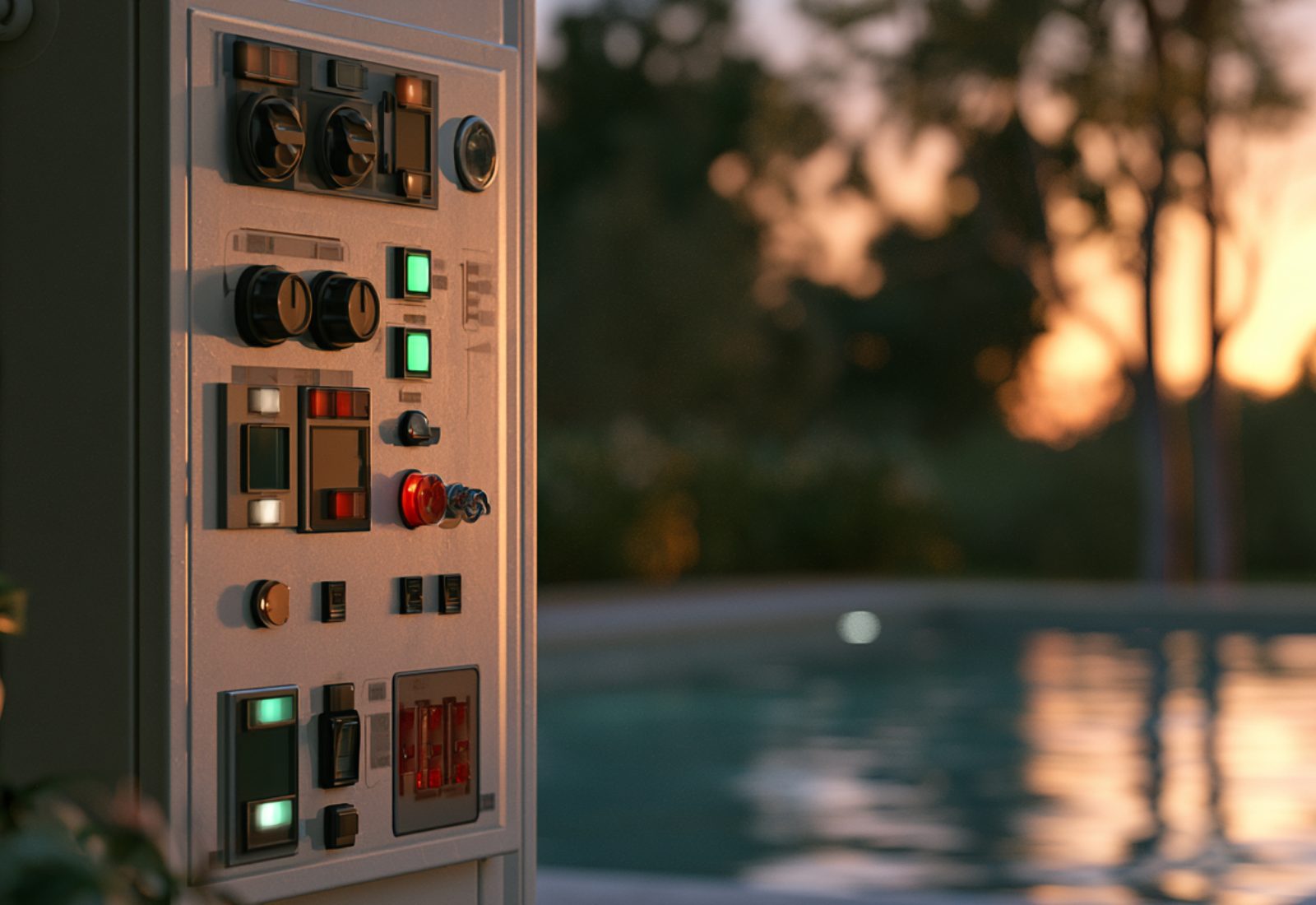
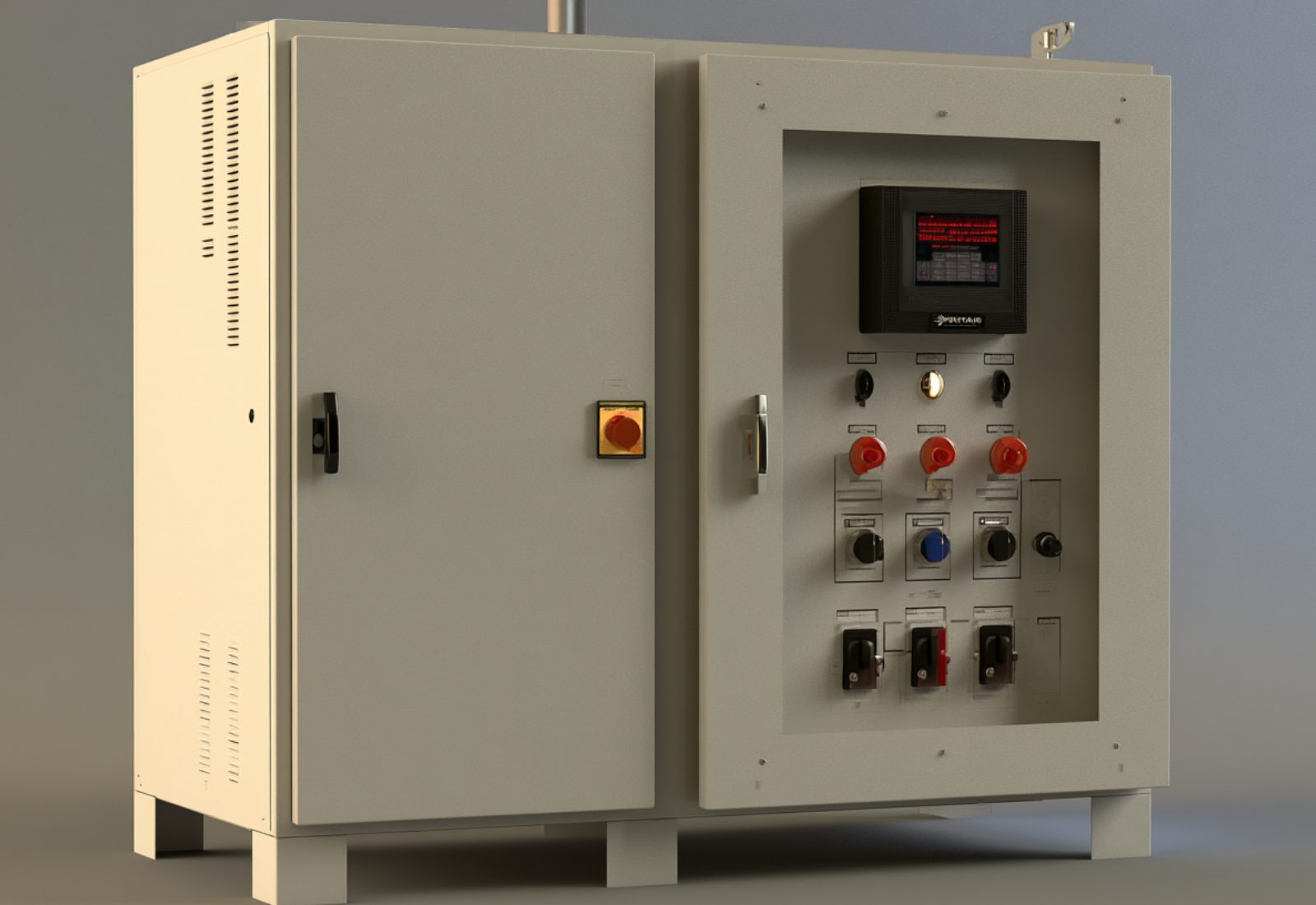
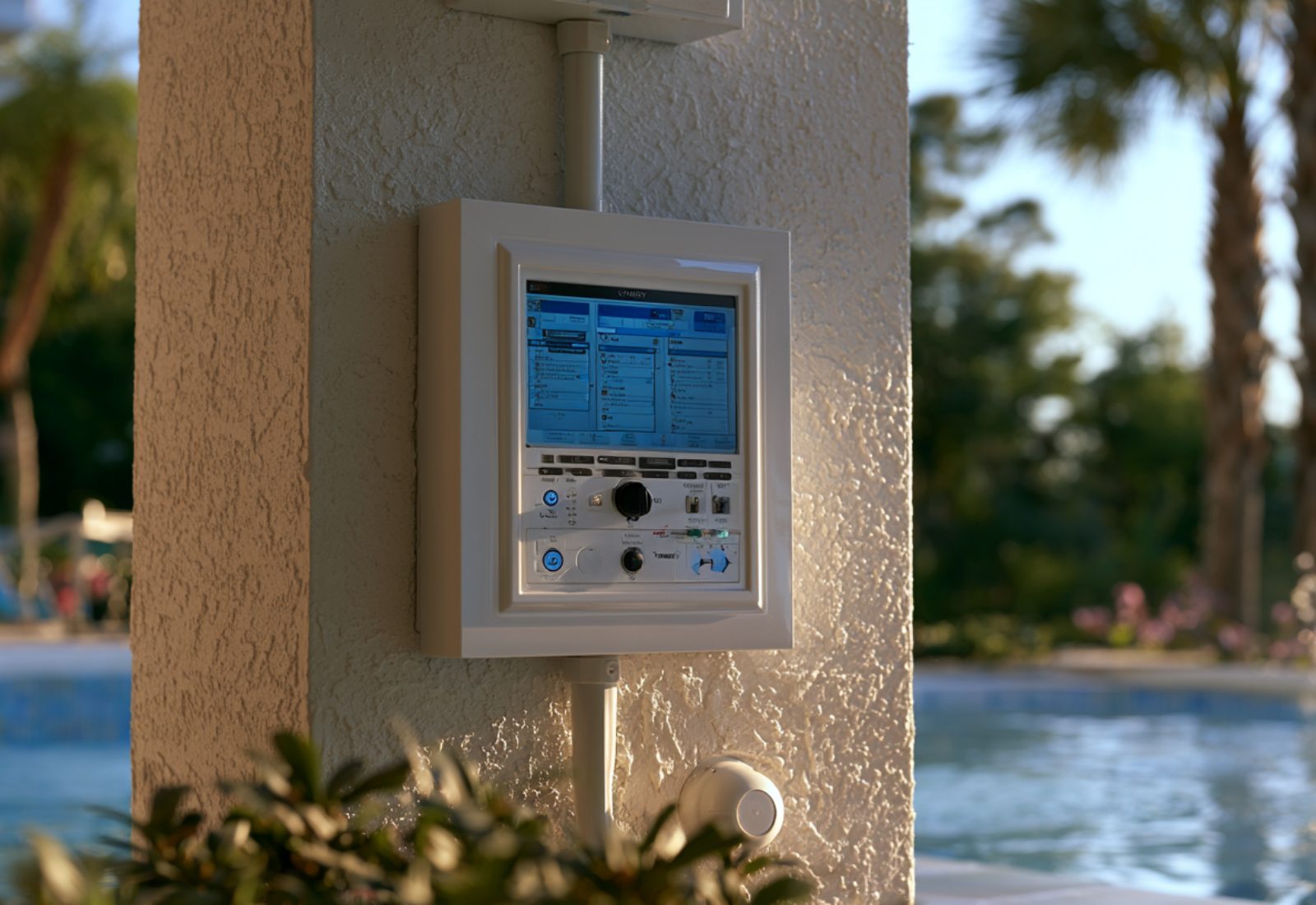
A pool automation controller is a central system that coordinates several pieces of equipment together — pump, heater or chiller, valves, pool and spa modes, lights, water features, sanitizer and chemistry — through one interface. It is not required for every smart pool. Plenty of pools are well served by individual smart equipment, each doing its own job.
A controller earns its cost when coordination is the actual problem: a pool and spa with automated valves, a heater, water features, several lighting zones and equipment from more than one manufacturer.
Open / mixed equipment
Poolside Tech Attendant
Our leading candidate for high-end installations with equipment from multiple manufacturers, because Poolside publishes integrations across a wide range of brands rather than a single ecosystem.
Documented integrations for Moov AI pumps and Moov inverter heat pumps
Integrations published for Pentair, Jandy and numerous other manufacturers
Salt systems, lights, covers and generic high-voltage equipment
RS-485 connection to the MP2AI using the communication cable included with the pump
Best fit when your pad is genuinely mixed-brand, or when you want the freedom to choose future equipment on merit rather than on badge.
Pentair ecosystem
Pentair IntelliCenter
A centralized, expandable platform controlling multiple devices including pumps, lights and water features. The right answer when a customer already owns Pentair equipment or specifically wants a Pentair-centric pad.
Central management of pumps, heaters, valves and chemistry
Expandable as the pad grows
Strong fit where Pentair is already dominant
Jandy ecosystem
Jandy AquaLink
Best fit when a property is already Jandy-heavy or the customer specifically wants Jandy. Where replacing the automation architecture creates no meaningful benefit, we work within what is there.
Lighting, water features and spa settings
Valves, filtration and cleaning control
Pool and spa temperatures managed remotely
One-touch macros for common scenes
Choosing
Which controller path fits your pool
There is no single best controller. There is a best controller for your equipment, your goals and what you are likely to add next.
Your situation
Usual recommendation
Why
Mixed-brand equipment pad
Poolside Tech Attendant
Broadest published integration list; avoids ecosystem lock-in
Already Pentair-heavy
Pentair IntelliCenter
Native control of equipment you already own
Already Jandy-heavy
Jandy AquaLink
No benefit in replacing a working architecture
Two or three smart devices, no spa
Often no central controller
Individual equipment apps may cover it
Pool + spa, valves, features, chemistry
Central controller of some kind
Coordination is the actual requirement
Planning to replace equipment soon
Decide the controller first
It determines which equipment to buy
This is where a bad sequence gets expensive. Choosing equipment before deciding the control architecture is the most common way owners end up buying twice.
Questions
Controller FAQ
Yes, and most real equipment pads are mixed already. What matters is whether your chosen controller can communicate with each piece. Open platforms publish integration lists; manufacturer ecosystems are strongest with their own equipment and vary in how well they handle everything else.
This is exactly why we ask about your long-term intent before installing anything major.
RS-485 is a wired communication standard used widely in pool equipment for devices to exchange data with a controller. It carries protocols such as Modbus. Practically, an RS-485 connection means a controller can do more than switch a device on and off — it can read status and send detailed commands.
A dry contact is a simple switch closure with no voltage of its own, used to trigger equipment that has no data connection. It is the fallback when a device cannot be integrated properly — you get on/off control, but not status or fine control.
If a company tells you a device is 'integrated' when it is really just on a dry contact, that is worth knowing before you pay for it.
Not automatically. If your current system does what you need and the equipment you plan to add can join it, replacing it is money spent for no gain. We replace an automation architecture when it genuinely blocks what you want to do — not because it is not the newest thing available.
With a central controller and equipment it can talk to, largely yes — that is the main reason people install one. Without it, you end up with a separate app per device, which works but rarely feels like automation.
Fit check
Do you actually need a central controller?
Yes, if
You have a pool and spa with automated valves
There is a heater or chiller plus water features
You run multiple lighting zones
Equipment on the pad spans more than one manufacturer
You want scenes — one action that sets several systems
You are tired of juggling one app per device
Not yet, if
You own two or three smart devices and no spa
Their own apps already cover what you do
There are no automated valves to coordinate
You would be buying it before the equipment it is meant to control
AquaLit's recommendation
Decide the control architecture before you replace major equipment. That single sequencing decision prevents the most expensive mistake we see — buying a heater or salt system this year that next year's controller cannot properly talk to.
For a genuinely mixed pad, an open platform is our leading recommendation. For a pad already dominated by Pentair or Jandy that works, staying put is usually the better financial answer, and we will tell you so.
Mixed-brand pad — open platform such as Poolside Tech Attendant
Pentair-dominant — IntelliCenter
Jandy-dominant — AquaLink, usually reconfigured rather than replaced
Ask which devices are truly integrated and which are on dry contacts
Call or text for a free pool assessment. We look at the pool, the equipment already on your pad and how you actually use the backyard — then tell you what is worth doing and what is not.
Tell us what you have and how you use the pool. We'll walk the equipment pad, ask what you ultimately want controlled, and give you an honest recommendation — including the upgrades we'd skip.