1. Measure
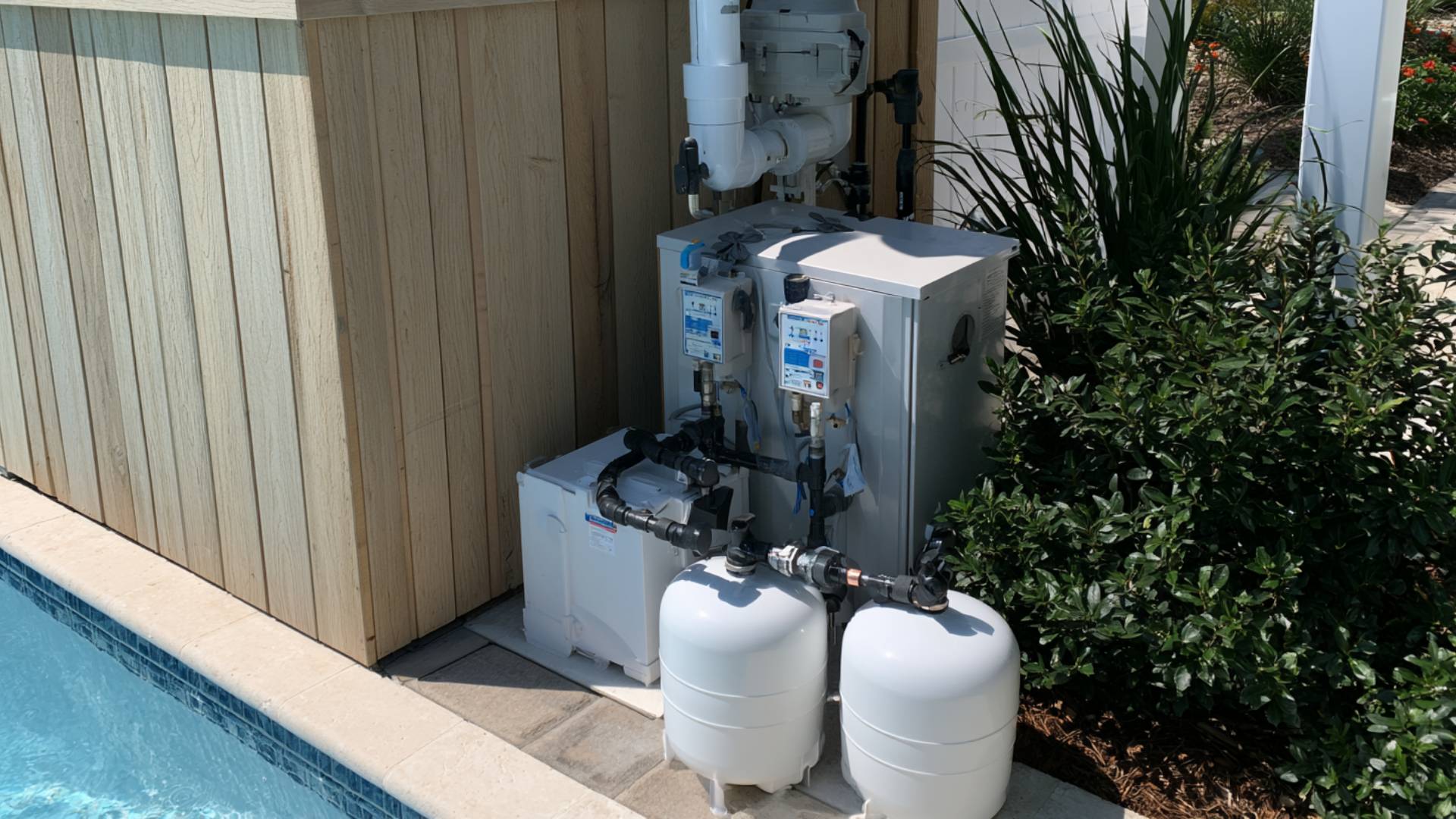
An ORP probe reads oxidation-reduction potential — how effectively the water is sanitizing right now. A pH probe reads acidity. Both sit in a flow cell plumbed into the circulation loop so they see moving water rather than a stagnant sample.
2. Decide
The controller holds your target band and a set of limits: maximum dose length, minimum interval between doses, and a hard stop if readings look implausible. Those limits are what stop a drifting probe from becoming a chemistry incident.
3. Dose
A peristaltic metering pump injects a measured volume into the return line, downstream of the heater, through an injection fitting sized for the chemical. Dosing is interlocked with flow — no circulation, no dosing.
4. Verify
Probes drift. They get coated, they age, and they read differently at different temperatures and stabiliser levels. Cleaning and calibration on a schedule is what keeps the loop honest, and it is why automated pools still get service visits.
What it does not measure
- Total alkalinity
- Calcium hardness
- Cyanuric acid
- Salt level, on a salt pool
All four still need testing by a person. They change slowly, which is exactly why they get forgotten on a pool that appears to be handling itself.